Oregon Wine Visits, May 2026 – Part 3
After enjoyable winery visits with friends to Teutonic in Portland on Saturday and then to Soter and White Rose in Willamette Valley on Monday, I was looking forward to the visits I’d arranged for the next two days. I was staying for a few days at the house of my friends Steve and Tina in Newberg, which proved to be a very convenient base for exploring Willamette Valley wine country.
At our Tuesday breakfast, Steve, Tina, and I enjoyed the bread that my friends Jon and Ling had baked and given me when I visited with them over the previous weekend at their house in Camas, Washington. It turned out that Steve had work he needed to attend to and was unable to join Tina and me for our Tuesday wine visits. We had time to relax for a bit that morning since our first appointment, at J.K. Carriere, was only about a ten-minute drive from their house.
J.K. Carriere
My second day of Willamette Valley winery visits began with a short drive from where I was staying with my friends Steve and Tina in the Parrett Mountain area near the town of Newberg. Steve wasn’t able to join Tina and me on this day, and I drove to our first destination, J.K. Carriere. I’m not sure whether I’d tasted their wines prior to this visit but Steve and Tina had recommended them, as had another friend, winemaker Ed Kurtzman. Ed is a longtime friend of J.K. Carriere owner / winemaker Jim Prosser, and I was glad that I was able to make the connection to visit with Jim.
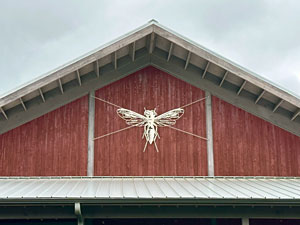
There was a light but steady drizzle when Tina and I arrived at the tasting room – not much of anything to bother us but it was enough that Jim had to postpone spraying his vineyard that day. A large artwork depicting a wasp is prominently displayed on the building that houses the winery and tasting room, and wasp artwork also adorns the J.K. Carriere wine labels. Jim is severely allergic to the stings of these wasps of the family Vespidae – not great for anyone but especially not for someone who works in a vineyard – and he’s had to take several trips to the hospital as a result. As Jim mentions on the winery website “if it’s real enough to kill you, it’s real enough to earn a place on your label.”
The winery name of J.K. Carriere pays tribute to Jim’s two grandfathers, J.K. Prosser & Paul Carriere. Jim told us a little about them, and it sounds like they were both colorful characters – J.K. Prosser had once been a part-time bootlegger in Montana. Jim grew up in Bend, Oregon, and he told us that after graduating from Oregon State University in the mid-1980s he joined the “dress for success” crowd working in finance. In time he felt he needed a change of direction in his life, and during the succeeding years he worked in Lithuania for the Peace Corps and climbed mountains in Pakistan and Nepal. He thought about going back to school to study architecture, and also thought about training to become a chef. But he gave winery and vineyard work a shot, with a focus on Pinot Noir. He worked in 1995 at Erath Winery in Willamette Valley – as well as at Domaine Drouhin, Brick House and Chehalem – and he’s also worked at wineries in Burgundy, New Zealand, and Australia. In 1999 he returned to Oregon and launched his own winery.
Jim started out making wine from purchased fruit but he was on the lookout for a spot where he could plant his own vineyard. It took him awhile to find a property with the right location and right soil that he felt would support a great vineyard. He finally found a 40-acre property in 2007 and in the following couple of years he planted a 22-acre vineyard and built a winery there as well. Jim told us that the site had been logged before and had once been a cherry orchard so it was already clear when he purchased it. Jim calls the vineyard St. Dolores Estate as a tribute to his mother.
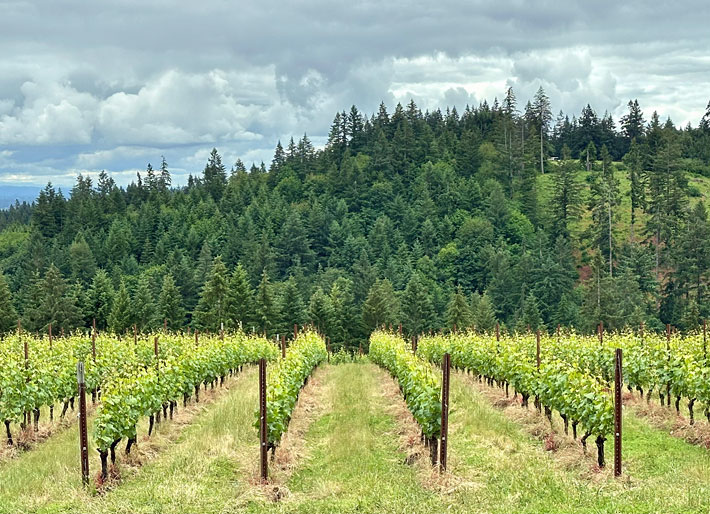
Located in the Chehalem Mountains AVA, the vineyard is on a southeast-facing hillside site at about 700-foot elevation, higher than most Willamette Valley vineyards. The soil is silty clay loam topsoil with low pH Jory series volcanic soil about 12” down. Jim told us that he feels soil is the biggest key to a vineyard’s quality. He has about 38,000 vines planted, with around 90% Pinot Noir and 10% Chardonnay. He said that he’s not particularly concerned with what clones there are, as he feels that the site is more important than clones once the vines are over about ten years old – Jim hopes that the vines there will last for 50 years. The vineyard is certified organic and is no-till and dry-farmed. J.K. Carriere is a member of the Deep Roots Coalition, an organization that promotes dry-farming vineyards, with no irrigation. Jim uses organic sprays for the vines including sulfur and cinnamon oil, mainly to help prevent powdery mildew – he said that after cinnamon oil sprays the vineyard smells like a Cinnabon!
One of the first things Jim told Tina and me when we met at his tasting room is that “farming is paramount.” He said that a vineyard’s potential depends on the farming, and that the same is true for a winery’s expression of a vineyard site. Other things he mentioned is that he’s aiming for his results to be “optimal rather than maximal,” and looking for a lot of things to be “pretty good,” very little to be “pretty bad,” but he realizes that nothing will be “perfect.” Jim also said that he feels he’s a better farmer and winemaker than a marketer – something I’ve heard from many vintners over the years!
|
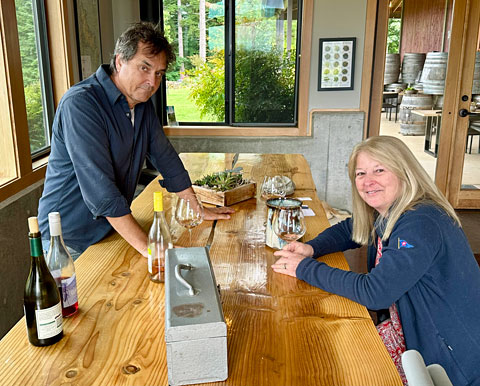
| Jim Prosser with Tina Jones |
Fruit from St. Dolores Estate comprises about 85% of the J.K. Carriere wine program, and Jim does not sell any of this fruit to other vintners. Purchased fruit currently comes from Temperance Hill in the Eola-Amity Hills AVA and Gemini Vineyard in the Chehalem Mountains AVA. Jim prefers higher-elevation vineyards, and feels that the vines at those sites tend to “wake up later” and “go to bed earlier” each day. Jim told us that the fruit throughout his vineyard typically all ripens within a span of about ten days. He mentioned that his harvests had typically taken place in past years mostly in October but they’re now mostly in September. He said that he’s picking fruit less ripe than he did 20 years ago, and there may be other factors involved in the earlier harvests as well, such as climate change and vine age. Jim noted that there should be less need to drop fruit as his vines mature and regulate their growth better.
Fruit is harvested early in the morning and the Pinot Noir is destemmed and fermented by native yeast in three-ton open top stainless steel tanks. It’s pressed after about three to four weeks and aged in French oak barrels for around 18 months before being bottled. Jim favors Sirugue barrels and uses around 15-20% new oak on most of the Pinot Noirs. Chardonnays are fermented and aged in mostly older French oak – Jim said he wants the oak to lift the wines rather than overwhelm them. He loves higher acidity in his Pinots and feels that helps them develop well with bottle age. Jim expects his Pinots to put on heft for about three years after bottling and then to continue gaining complexity.
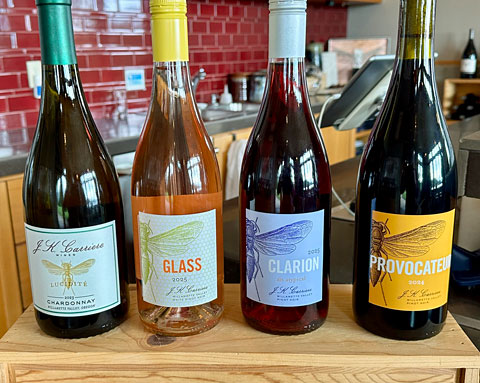
As Tina and I sat in the tasting room, Jim poured us tastes of most of his current releases, beginning with the 2025 “Glass” White Pinot Noir. Though made from Pinot Noir grapes, this is made like a white wine, direct-pressed right away and barrel-fermented in older French oak – Jim stirs Chardonnay lees into the barrels to help add texture and remove color. This had citrus, stone fruit, and floral aromas and combined a pleasant medium-light mouthfeel with a vibrant finish. Next was the 2023 “Lucidité” Chardonnay, with about 50% of the fruit sourced from St. Dolores Estate and 50% from Temperance Hill Vineyard, whole-cluster pressed and then fermented and aged for one year in barrel with about 12% new oak. This featured bright lemon, floral, and spice notes with zippy acidity and great texture on the palate.
Moving along to Pinots, Jim poured his 2025 “Clarion” Pinot Noir. He calls this “an atypical” Pinot Noir – it’s more of a chillable light red wine. Partly pressed off of the skins early, Jim originally made this wine in 2020 to deal with that vintage’s smoke issues, and he described the pretty color as “jewel box.” With bright cherry and red berry aromas and hints of spice and flowers, this may not have a lot of complexity but it’s a very refreshing lighter Pinot for early drinking. Jim led Tina and me back into the winery space behind the tasting room for our next wine, the 2024 “Provocateur” Pinot Noir. Most of the fruit for this came from St. Dolores Estate, plus some from Temperance Hill and Gemini vineyards. This displayed beautiful floral aromas plus red fruit, earth, and savory herb notes.
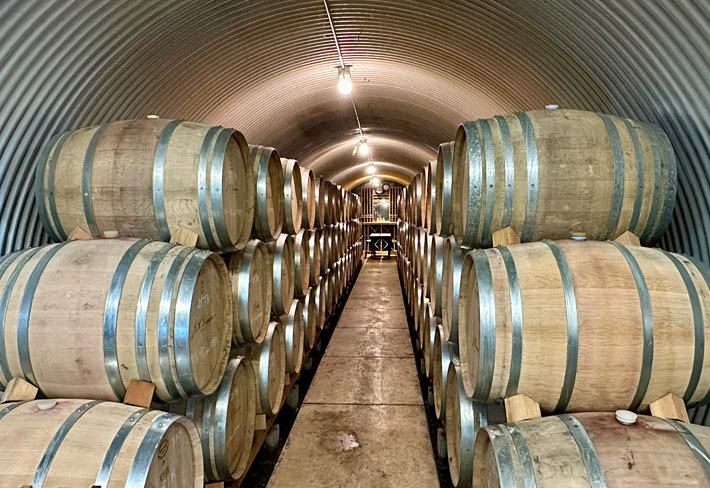
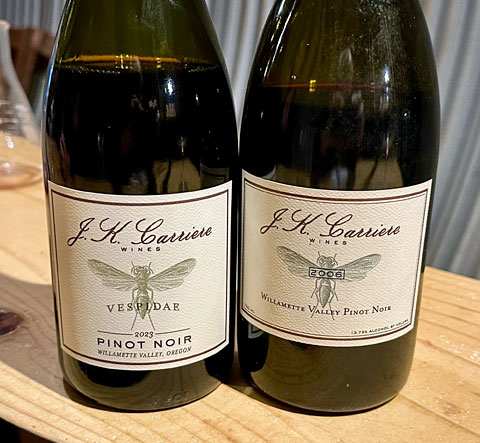
We proceeded further back in the winery and into the wine cave used for barrel storage. The cave was made from a 12-foot diameter metal culvert pipe with earth and grass added back on top. We sat at a table at the very back of the wine cave for the 2023 “Vespidae” Pinot Noir. This is J.K. Carriere’s core wine, sourced entirely from St. Dolores Estate and Temperance Hill Vineyard. With lovely floral, black cherry, spice, and savory notes, this had more body than the “Provocateur” with fine acidity and plenty of structure for cellaring. After we’d tasted that, Jim asked if we’d like to taste an older vintage of the wine, and we couldn’t say no to that! He pulled out a library wine, the 2006 Willamette Valley Pinot Noir. This was the predecessor to the “Vespidae” bottlings, made before St. Dolores Estate was planted. Jim told us that 2006 was a warmer vintage, and that most of the fruit came from Pommard clone vines planted in 1991 at Temperance Hill Vineyard. Along with savory and umami notes, the earthy black cherry aromas showed a somewhat riper character than in the “Vespidae,” while the acidity and fine tannins carried the flavors to a tasty finish.
J.K. Carriere produces about 4,000-5,000 cases per year, with the “Lucidité” and “Vespidae” considered to be their flagship wines. In addition to the bottlings we tasted on this visit, there are three limited bottlings of Pinot Noir – St. Dolores Estate, Gemini Vineyard, and “Antoinette” from Temperance Hill Vineyard. The winery’s top of line bottling “Cuvée Lola” Pinot Noir – named for Jim’s daughter – is only made in exceptional vintages. There are also a couple of other wines made on occasion – a Blanc de Noirs sparkling wine and a fortified dessert wine called “Insubordination.” Several tasting options are available at J.K. Carriere on Fridays through Sundays with reservations highly recommended though walk-in visitors are also welcome. Advance appointments for tastings and tours during the week are also possible.
Visiting and tasting with Jim at J.K. Carriere was one of my favorite wine experiences of this trip, and Tina really enjoyed it too. Jim was the most interesting and fun character of any of the vintners we visited in Willamette Valley, with an understated yet effective sense of humor. But humor aside, it was clear that Jim is very serious about both farming his vineyard and making his wines, and that came through in all of the wines that Tina and I tasted with him. I liked all of the wines, with my favorites among the current release wines being the 2023 “Lucidité” Chardonnay, 2024 “Provocateur” Pinot Noir, and 2023 “Vespidae” Pinot Noir – and the 2006 Willamette Valley Pinot Noir that Jim generously opened for us was developing beautifully. The prices of all the J.K. Carriere wines are extremely reasonable for the quality, and the “Provocateur” Pinot Noir in particular seems like a steal! If you’re in the Willamette Valley wine region, make sure you visit J.K. Carriere.
After our tasting at J.K. Carriere, Tina had recommended a lunch spot in Dundee since our afternoon wine visit was close by. But after driving up to the place, we found it was closed that day so we decided to go back to nearby Red Hills Market where we’d had lunch the day before. This time the line to order at the counter was much shorter, and it didn’t take long for our food to arrive. We’d found the sandwiches to be quite large the previous day, so Tina and I split a roasted turkey sandwich with cream cheese, sliced apple, arugula, and burnt orange vinaigrette, which came with salt & pepper chips. Once again Red Hills Market was the perfect option for our lunch break. We had more time on this day to enjoy our meal than our rather rushed lunch the day before, so we were able to relax for a bit before heading to our afternoon wine appointment at Day Wines.
Day Wines
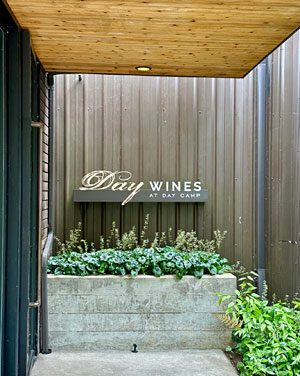
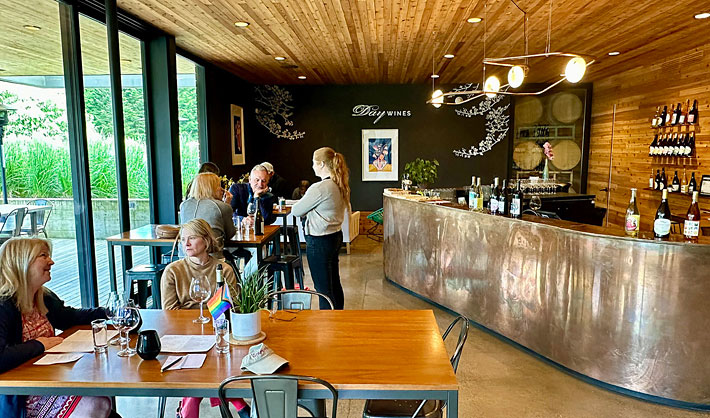
After lunch my friend Tina and I made the short drive to our afternoon Willamette Valley wine appointment, at Day Wines on the edge of the town of Dundee. I hadn’t tried any of their wines prior to our visit but the wine lineup interested me in its diversity, a nice break from the Chardonnay- and Pinot-focused offerings at our other visits. The tasting room is conveniently located right off of the main highway, and after parking there we walked into the sleek modern building. Tasting room manager Leyla Ersan welcomed us in and we took a seat while we waited for owner / winemaker Brianne Day to join us. After just a couple of minutes Brianne came in and sat down with us.
Brianne told us about her background. She’s a fourth-generation Northwesterner, and grew up in Washington before moving to Oregon when she was a teenager. She enjoyed both cooking and gardening while she was growing up, and she likes maintaining those interests with her wine work. Brianne said that she also enjoys the physicality and creativity of winemaking. Her first real experience with wine came while traveling in northwestern Italy when she was 19, and it quickly became her main interest. Brianne was determined to learn more, and she spent two years in her early twenties traveling to about 80 wine regions all over the world, talking with winemakers and grapegrowers, tasting over 1,500 wines, and taking extensive notes on the wines and on the different viticultural and winemaking practices she encountered. She felt that most of the wines that particularly impressed her came from organically- and biodynamically-farmed vineyards and were made using low-intervention winemaking methods.
Brianne returned to Oregon in 2008 and worked at a number of Willamette Valley wineries, including Eyrie, Belle Pente, Grochau Cellars, and Scott Paul. She established her own label in 2012, making five barrels of Pinot Noir from that vintage. Brianne developed a business plan for her winery, and by good fortune she met some people at a dinner who went on to become investors in her wine business. That’s helped allow her to grow her business, and she now produces around 14,000 cases per year, with a winery team that’s entirely female. Brianne has been involved with many aspects of the wine business over the years, and she told us that in addition to making her wines, she still does her own bookkeeping and sales work, including deciding on the catchy names of a number of her bottlings. She also had considerable input into the design of her tasting room, which opened in 2017. Brianne was named as a semifinalist for a James Beard Award in 2020 in the category of Outstanding Wine, Spirits, or Beer Producer.
Although Brianne has continued to have interest in making Pinot Noir since her first vintage, she’s expanded her focus to include other interesting grape varieties – mostly not ones you typically see from Willamette Valley wineries. She wants to show that Oregon is more than just a US version of Burgundy and that wines from many varieties can excel there. Day Wines does not own any vineyards, and all of their fruit is purchased from organic and biodynamic vineyards in Oregon. Her winemaking is low-intervention, using native yeast fermentation for all of her wines, with the only addition (except for her “Bambino” Amaro) being a minimal amount of SO2.
Ever since her introduction to fine wine in Italy, Brianne has had a particular interest in Italian grape varieties, and she’s been working with them more in recent years. In fact she’s launched a second wine project with friends from the Netherlands to make and import wine from the Piemonte region of Italy. These wines are under Brianne’s new Zambelli Wines label, and the inaugural releases include “Sun Sister” Arneis, “Mother Tongue” Rosé from Nebbiolo and Freisa, “Temptation of Eve” Grignolino, and “Alchemist’s Daughter” Freisa, and there will be an upcoming Ruchè as well. Making wine on two continents must certainly keep Brianne busy!
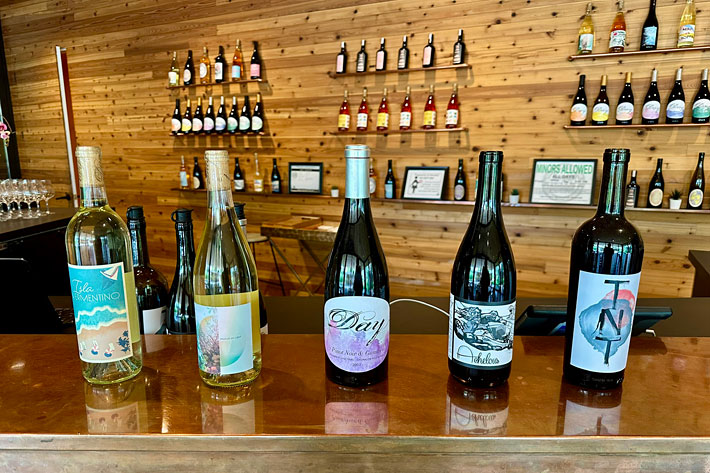
Tina and I began our tasting with Brianne with her 2023 “Isla” Layne Vineyard Vermentino. The fruit came from Applegate Valley in southern Oregon, and it was direct-pressed and then fermented in neutral puncheons before being aged in Italian clay tanks. It had aromas of stone fruit and citrus plus a saline note, with medium-light body and a lively mouthfeel and finish. Next was the 2023 “Dazzles of Light” Oregon White Blend – this is from 60% Chardonnay, 31% Sauvignon Blanc, and 9% Melon de Bourgogne, and aged in older French oak barrels. This displayed bright citrus, pear, and fresh herbs on the nose, medium weight on the palate, and a clean finish.
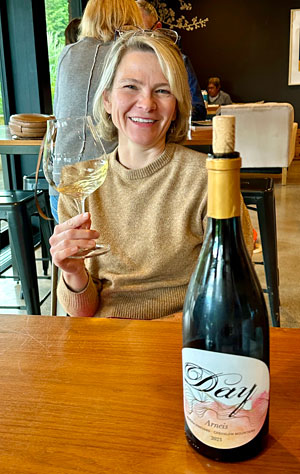
We tasted one more white wine, the 2023 Aurora Vineyard Arneis, sourced from the Chehalem Mountains AVA in Willamette Valley, direct-pressed, and aged in a 700-liter French oak oval. With pear, spice and mildly floral aromas, this had medium body with good acidity, a lively mouthfeel, and a long, tasty finish. Although we didn’t taste the “Lemonade” Rosé, Brianne told us that she made a lot of rosé due to smoke issues during the 2020 vintage in Oregon, and that this wine has become a big seller for her. She coined the name for the wine since she felt she was making lemonade from lemons during a difficult vintage.
Our first red wine was the 2022 Nemarniki Vineyard Pinot Noir & Gamay. The fruit for this also came from the Chehalem Mountains AVA, and the wine is 60% Pinot Noir and 40% Gamay. The Pinot was fermented with 25% whole clusters while the Gamay was entirely destemmed, and the wine was barrel-aged for two years with about 15% new oak. The wine featured both red and black cherry fruit, spice, earth, and floral notes, with a lively texture and fine tannins. We followed that with the 2022 “100 Years A Lady” Pinot Meunier, which came from three vineyards in the Willamette Valley’s cool Van Duzer Corridor AVA. The wine is named in honor of Brianne’s grandmother’s 100th birthday. This showed earthy red fruit plus undertones of spice and fresh herbs, with medium body with moderate tannins.
Brianne next poured us the 2022 Momtazi Vineyard Pinot Noir from the McMinnville AVA in Willamette Valley. The vineyard is biodynamically-farmed, and the block that Brianne’s fruit came from is near the top of the vineyard slope with thinner soil. Made with Pommard, 667, and 777 Pinot clones, this was fermented with about 33% whole clusters and spent 2½ years in barrel before bottling. This had bright red fruit plus a forest floor / mushroom element that gave the wine an umami character, with lively acidity and good structure for further aging. Even with all of the other grape varieties that Brianne works with, she still makes a standout Pinot Noir! She told us that she prefers to use all free-run rather than press wine for her Pinot Noirs and Pinot Meunier, as she likes the purity and freshness that it gives the wine. The press wine goes into other red blends.
Our final red wine was the 2021 “TNT” Layne Vineyard Tannat from Applegate Valley – this fruit was from the last pick of the 2021 vintage. It was fermented with some whole clusters and was barrel-aged for three years. Brianne told us that her red wines generally spend three to four weeks on the skins before being pressed. The Tannat featured plum and darker berry fruit along with savory herbal and chalky mineral notes, with medium-full body and bigger but not aggressive tannins.
We concluded our tasting with two sweet wines. The NV “Bambino” Amaro is an Italian-style digestif – this one started with Pinot Noir, which was fortified with neutral spirits before additions of various botanicals including strawberries, cherries, citrus peels, anise, and more. The overall sensation was of cherry fruit plus orangepeel, herbs, and a mix of bitter and sweet on the palate, with good acidity and moderately rich texture. The NV “One Trick Peony” Mistelle is Pinot Blanc-based, and unlike the “Bambino” it was fortified with neutral spirits just as fermentation started and with no other additions. This was sweeter, with pear and a touch of spice on the nose, and a more rounded mouthfeel and finish.
Day Wines makes a lot of different wines, with over 25 current releases available. In addition to the wines that Tina and I tasted on this visit, other current bottlings include Chardonnay, Muscat, several rosés and skin-contact white wines, Dolcetto, Mondeuse, Syrah, additional Pinot Noir bottlings, and a number of blends. The Day Wines tasting room is open daily and reservations are suggested but not required.
Brianne was a charming host for Tina and me at her tasting room. It was fun to try wines from such diverse grape varieties on this trip, and Brianne has done a great job with all of them. Her background is so interesting, and I got the sense that she may be the most business-savvy of any of the vintners I visited in Willamette Valley, though that certainly doesn’t take a back seat to her winemaking skill and artistry. I enjoyed all of wines that Brianne poured for us, particularly the 2023 “Isla” Layne Vineyard Vermentino, 2023 Aurora Vineyard Arneis, 2022 “100 Years A Lady” Pinot Meunier, 2022 Momtazi Vineyard Pinot Noir, and NV “Bambino” Amaro. I’d love to try the Zambelli wines that Brianne makes in Piemonte sometime too. In an area with so many higher-priced wines, the Day wines are all super-reasonable in price, especially given the quality. I definitely recommend visiting the tasting room and trying something outside of the usual Willamette Valley grape varieties at Day Wines.
We headed back to Steve and Tina’s house after our visit to Day Wines, and they suggested grilling some salmon for dinner that evening. Tina and I had a great time at both J.K. Carriere and Day Wines – really good wines, and both winemakers were so much fun to talk with. The dinner was terrific, and the salmon was some of the best I’ve had in recent memory. Steve and Tina opened a J.K. Carriere “Provocateur” Pinot Noir to go with the salmon and it was a perfect match. The drizzly weather had cleared up earlier that day so they suggested sitting around their backyard fire pit as the sun was going down that evening. That was quite pleasant except for trying (not very successfully) to avoid smoke from their fire as the light wind kept shifting direction. Still, it was a fine ending to a most enjoyable day.
|